︎

one only for the wind

Bergen Kunsthall, Bergen, Norway, 2019

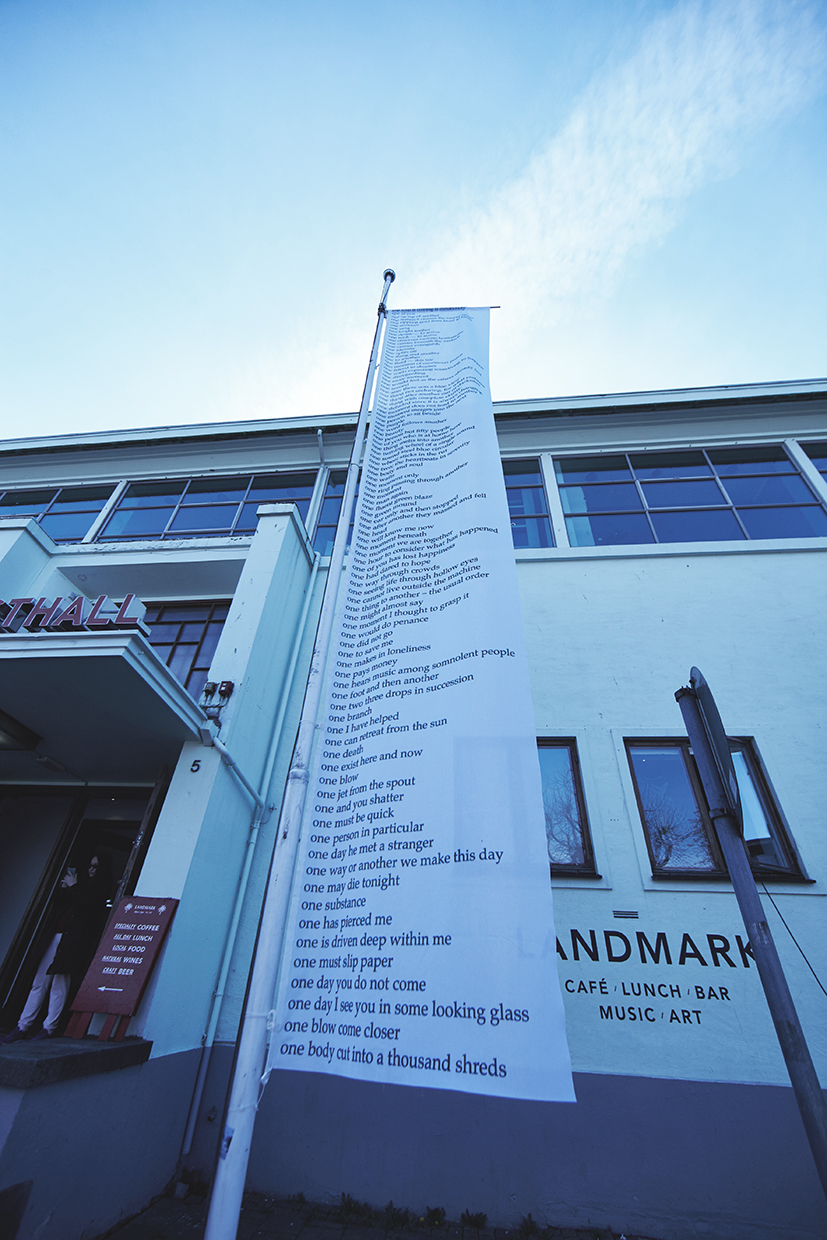
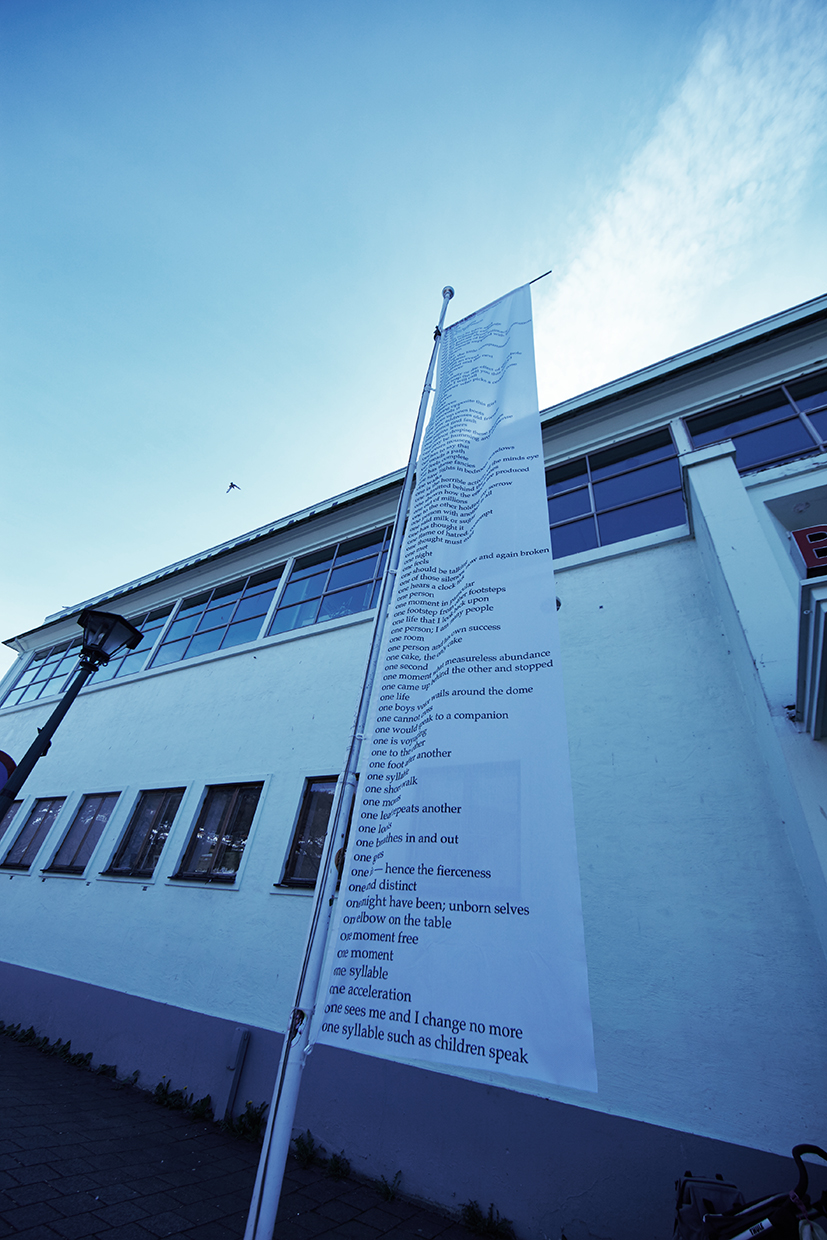
one only for the wind begins by attending to a recurring linguistic gesture within The Waves by Virginia Woolf. The work collects every phrase that begins with the word ‘one’ in the text, allowing a dispersed voice to emerge through a simple constraint.

In Woolf’s writing, ‘one’ moves between positions at times indicating an individual, at others suggesting something more collective or indistinct. It offers a way of speaking that resists fixed identity, opening a space where subjectivity becomes shared, shifting, and relational. This ambiguity aligns with Woolf’s broader feminist project, in which the boundaries of the self are loosened and reimagined beyond singular or stable forms.

Gathered together, these phrases form a text that is neither fully singular nor fully collective. The voice that emerges remains open, allowing readers to enter and locate themselves within it. The text is presented on large-scale sail flags positioned outside the gallery. Exposed to wind and weather, the words do not remain still. They fold, stretch and intermittently disappear from view, their legibility shaped by movement and changing conditions. Reading becomes partial and contingent, dependent on forces beyond the reader’s control.


There is a possible reading of this gesture as one of extraction, of taking language from its original context and placing i elsewhere, or of presenting it on a form associated with declaration and ownership. The flag, often tied to ideas of territory, identity and nationhood, carries these connotations with it. The work does not attempt to resolve this tension, but remains within it, destabilising ideas of sovereignty. Rather than claiming or fixing the text, it places it into a structure that unsettles its authority. The flags do not hold the language in place, they are subject to wind, folding, obscuring and revealing the words unevenly. What might appear as a stable surface for inscription becomes unstable, contingent, and difficult to fully read. 

Language and authorship are not presented as owned or fixed, but as something that moves, disperses and exceeds the frame that attempts to contain it. The text does not settle into a singular voice or position, but continues to shift between them. What remains is not a claim over language, but an ongoing attempt to hold it in relation.